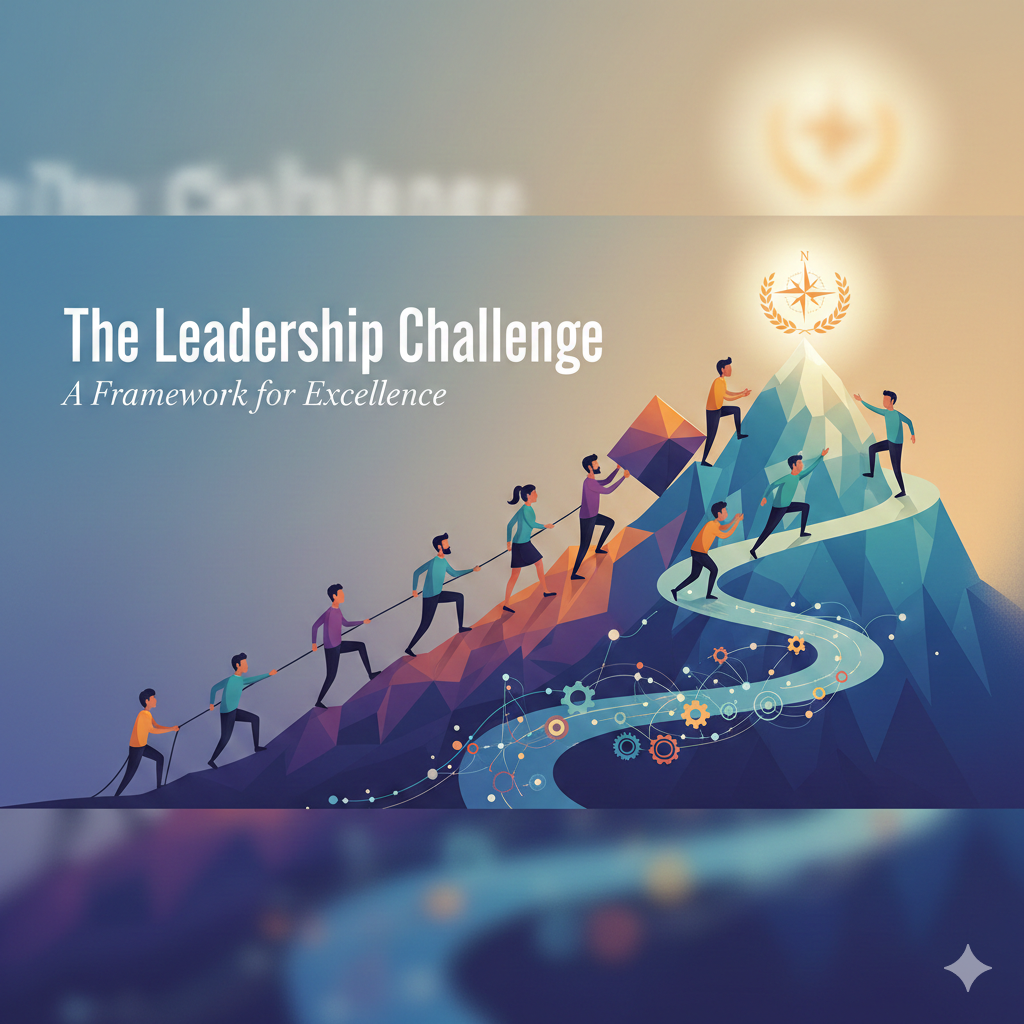
The Leadership Challenge: A Framework for Excellence
The Leadership Challenge, based on the decades of research by James Kouzes and Barry Posner, is one of the most recognized leadership models in the world. Rather than viewing leadership as an innate personality trait, they define it as a measurable, learnable set of behaviors.
At its core, the model identifies The Five Practices of Exemplary Leadership®, which provide a roadmap for individuals to transform values into actions and visions into realities.
The Five Practices of Exemplary Leadership
To lead effectively and inspire others to achieve extraordinary things, Kouzes and Posner suggest mastering these five core behaviors:
1. Model the Way
Leaders earn the right and the respect to lead through their personal involvement and direct individual contribution.
Clarify Values: Find your voice and affirm shared values.
Set the Example: Align your actions with the shared values of the organization.
2. Inspire a Shared Vision
Leaders gaze across the horizon of time, imagining the attractive opportunities that are yet to come when they and their constituents arrive at a distant destination.
Envision the Future: Imagine exciting and ennobling possibilities.
Enlist Others: Appeal to shared aspirations to bring others on board.
3. Challenge the Process
Leaders are pioneers—people who are willing to step out into the unknown. They search for opportunities to innovate, grow, and improve.
Search for Opportunities: Look outward for innovative ways to improve.
Experiment and Take Risks: Constantly generate small wins and learn from experience.
4. Enable Others to Act
Grand dreams don’t become significant realities through the actions of a single leader. Leadership is a team effort.
Foster Collaboration: Build trust and facilitate relationships.
Strengthen Others: Increase self-determination and develop competence.
5. Encourage the Heart
The climb to the top is arduous and long; people can get exhausted and frustrated. Leaders provide the "fuel" to keep them moving.
Recognize Contributions: Show appreciation for individual excellence.
Celebrate Values and Victories: Create a spirit of community.
Why It Matters
Research shows that when leaders practice these behaviors more frequently, their teams are:
More engaged and committed to the organization.
More productive and better at meeting deadlines.
More resilient in the face of change and adversity.